
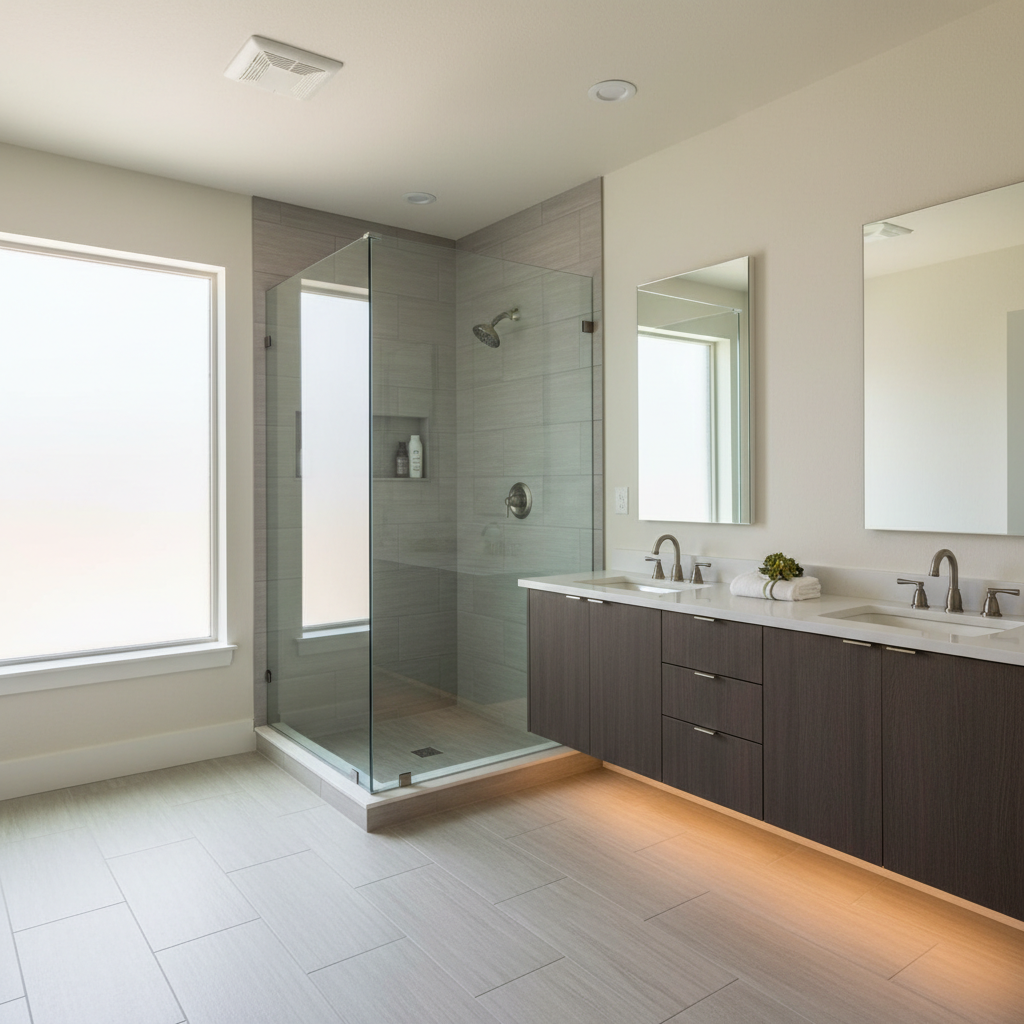
Houston's unique climate, characterized by high heat and pervasive humidity, poses significant challenges for home interiors, particularly in bathrooms and with flooring. These conditions can lead to moisture damage, mold growth, and reduced material lifespan if not addressed proactively during renovations. This article explores how smart material selections—such as moisture-resistant drywall, high-performance ventilation, porcelain tile, and luxury vinyl plank flooring—combined with expert installation and design principles, can transform your bathroom into a durable, healthy, and beautiful space. By prioritizing humidity-resistant solutions, Houston homeowners can protect their investment, enhance indoor air quality, and enjoy a long-lasting, low-maintenance home environment, creating a true haven against the Gulf Coast elements.
- Discover how Houston's humidity impacts bathroom and flooring choices.
- Learn about smart, moisture-resistant materials for walls, ceilings, and fixtures.
- Explore durable flooring options like porcelain tile and luxury vinyl plank.
- Understand the importance of professional installation and proper ventilation.
- Get actionable advice for planning your humidity-proof home renovation in Houston.
What You'll Learn
Houston, TX, a city known for its vibrant culture and warm hospitality, also comes with a unique climatic challenge: persistent, high humidity. While we love our mild winters and sunny days, the year-round moisture in the air can wreak havoc on homes if not properly addressed, especially in high-moisture areas like bathrooms and with sensitive materials like flooring. When you're planning a renovation in your Houston home, whether it's a refreshing bathroom update or a complete flooring overhaul, making smart, humidity-conscious choices isn't just an option—it's a necessity for long-term durability and peace of mind.
At ABA Construction, we've spent over 20 years helping Houston homeowners create beautiful, resilient living spaces. We understand firsthand the specific demands our Gulf Coast climate places on materials and construction techniques. This article is designed to guide you through the best bathroom and flooring renovation choices that will not only look stunning but also stand strong against Houston's humidity, ensuring your investment truly lasts.
Houston's Humidity: Why It Matters for Your Home
Living in Houston means embracing a humid subtropical climate. This translates to consistently high moisture levels in the air, often exceeding 70% relative humidity for much of the year. While a comfortable environment might feel pleasant, this constant moisture can infiltrate your home, creating prime conditions for a host of problems.
Bathrooms, by their very nature, are already high-humidity zones due to hot showers and baths. When you combine internal moisture with external atmospheric humidity, the challenge intensifies. This is particularly true for homes in neighborhoods like Katy, Sugar Land, and The Woodlands, where residents seek comfort and durability against the elements.
The Risks of Unchecked Moisture
Uncontrolled humidity can lead to several costly and unhealthy issues within your home. One of the most prevalent problems is mold and mildew growth. These unwelcome guests thrive in damp, warm environments, not only causing unsightly stains and musty odors but also potentially impacting indoor air quality and triggering allergies or respiratory issues for your family.
Beyond biological growth, excessive moisture can damage structural components. Wooden subfloors can warp, drywall can soften and crumble, and paint can peel. Over time, these issues can compromise the integrity of your home and significantly diminish its value. For homeowners in areas like The Heights or Memorial, protecting your property investment is paramount.
Even your beautiful new finishes are at risk. Non-resistant materials can swell, crack, or delaminate. This means that a renovation done without considering humidity might look great initially, but its lifespan could be drastically cut short, leading to expensive repairs and premature replacements.
Designing for Durability: Smart Bathroom Material Choices
When you embark on a bathroom renovation in Houston, selecting the right materials is the first and most critical step in humidity-proofing your space. Every surface, from the walls to the vanity, plays a role in resisting moisture and preventing long-term damage. You want products that are not just aesthetically pleasing but inherently robust against damp conditions.
Moisture-Resistant Walls and Ceilings
Standard drywall (sheetrock) is a common building material, but it's highly susceptible to moisture. In a Houston bathroom, you need something more resilient. Look for moisture-resistant drywall, often called "greenboard," which has a wax-coated paper facing designed to repel water. For shower and tub surrounds, cement board or fiber-cement board is the superior choice. These products are completely inorganic and will not decompose or grow mold, even if exposed to water.
Once your moisture-resistant substrates are in place, the right paint makes a difference. Opt for mold- and mildew-resistant paints, typically those with a satin or semi-gloss finish. These finishes create a harder, more washable surface that's less porous and easier to clean. Applying a high-quality primer specifically designed for bathrooms can further enhance durability and adhesion, creating an excellent moisture barrier for your walls and ceilings.
High-Performance Ventilation Systems
Perhaps the most crucial component for managing humidity in your Houston bathroom is an effective ventilation system. An undersized or poorly installed exhaust fan is simply not enough. You need a fan that can quickly and efficiently remove moist air from the space, preventing it from condensing on surfaces.
Look for fans rated for high Cubic Feet per Minute (CFM) relative to your bathroom's size. For example, a bathroom up to 100 square feet typically needs at least 1 CFM per square foot. Consider models with humidity sensors that automatically turn on when moisture levels are too high, or fans with built-in timers. Proper ducting, leading directly outside and not into an attic, is equally vital for ensuring that humid air is truly expelled from your home, protecting against moisture buildup in your attic space as well.
Fixtures and Finishes That Endure
Beyond walls and air, the details matter. For shower and tub surrounds, consider seamless options like acrylic or solid surface materials. These non-porous surfaces eliminate grout lines, which are often weak points for water penetration and mold growth. If you choose tile, select high-quality porcelain and pair it with epoxy or urethane grout. These advanced grout types are far more water-resistant, stain-resistant, and flexible than traditional cement-based grouts, making them ideal for the humid Houston environment.
When it comes to cabinetry, opt for materials that can withstand fluctuations in humidity without warping or swelling. Plywood boxes with solid wood frames are generally more stable than particle board. Ensure that all wooden components are properly sealed with a durable, moisture-resistant finish. Even hardware choices can play a role; consider finishes that are less prone to tarnishing or rusting in humid conditions. This attention to detail ensures your bathroom not only looks fantastic but performs flawlessly for years to come.
In Houston, a truly durable bathroom renovation hinges on selecting moisture-impervious materials for walls, investing in robust ventilation, and choosing resilient finishes that actively repel or withstand humidity, protecting your home from mold and structural damage.
Resilient Flooring: Standing Up to Houston's Moisture
Your flooring is a significant investment and a foundation for your home's aesthetic. In Houston's humid climate, choosing the right flooring, especially for moisture-prone areas like bathrooms, kitchens, and entryways, is crucial. The wrong choice can lead to warping, buckling, mold, and costly repairs. ABA Construction recommends focusing on materials engineered for high moisture resistance.
The Power of Porcelain and Ceramic Tile
Porcelain and ceramic tiles remain a top choice for Houston homes, particularly in bathrooms, utility rooms, and high-traffic areas. Porcelain, in particular, is extremely dense and virtually non-porous, making it almost completely waterproof. This makes it an ideal defense against spills, splashes, and ambient humidity. Both porcelain and ceramic are incredibly durable, easy to clean, and come in an endless array of styles, colors, and textures, mimicking everything from natural stone to wood.
For tile installations, proper subfloor preparation and the use of high-quality, flexible thin-set mortar and waterproof grout are essential. As discussed, epoxy or urethane grouts are superior for their moisture resistance and stain-blocking properties, providing an extra layer of protection. This combination ensures a beautiful, long-lasting floor that homeowners in Pearland and League City can confidently rely on.
Luxury Vinyl Plank (LVP) and Luxury Vinyl Tile (LVT)
In recent years, Luxury Vinyl Plank (LVP) and Luxury Vinyl Tile (LVT) have surged in popularity, and for good reason. Modern LVP/LVT products are engineered to be 100% waterproof, making them an excellent choice for any room in a Houston home, including bathrooms, kitchens, and basements. They offer incredible realism, convincingly replicating the look of hardwood and natural stone, but without any of the moisture-related downsides.
LVP/LVT is also remarkably durable, resistant to scratches, dents, and scuffs, which is ideal for busy households. Its comfortable underfoot feel and easy maintenance further add to its appeal. Many options feature click-and-lock installation, allowing for a floating floor that can better accommodate minor subfloor movement, a common consideration in Houston's clay-rich soil areas like Cypress and Spring.
Engineered Hardwood with Caution
While solid hardwood is generally not recommended for high-humidity areas like Houston bathrooms, engineered hardwood can be a viable option for other rooms, like living areas or bedrooms, if specific conditions are met. Engineered wood planks are constructed with multiple layers, including a core that is more dimensionally stable than solid wood, making it more resistant to warping and gapping in fluctuating humidity.
However, even engineered hardwood requires careful consideration. You must select products specifically designed for higher moisture resistance, ensure a professional installation with proper acclimation, and maintain consistent indoor humidity levels with your HVAC system. It's crucial to understand that while engineered wood is *more* moisture-resistant than solid wood, it is not waterproof and should still be avoided in full bathrooms or areas prone to standing water. For spaces like The Woodlands, where a natural wood look is desired, engineered options can work with the right planning.
Key Considerations for Humidity-Resistant Materials
Material Composition
Choose non-porous, inorganic materials like cement board, porcelain, or waterproof vinyl that naturally resist water absorption and mold growth.
Installation Method
Ensure proper waterproofing membranes, flexible grouts (epoxy/urethane), and sealed finishes are used to create an impermeable barrier against moisture.
Don't just think about materials; think about the entire system. A high-quality waterproofing membrane behind your shower tile, combined with a powerful exhaust fan and humidity-resistant paint, creates a multi-layered defense against moisture, far more effective than any single solution alone.
Partnering with Houston's Experts for Your Renovation
Successfully humidity-proofing your Houston home through renovation isn't just about selecting the right materials; it's equally about expert planning, precise installation, and a deep understanding of local conditions. This is where partnering with an experienced, local contractor like ABA Construction makes all the difference.
Why Local Expertise Matters
A contractor with a long history in the Houston area, like our team with over 20 years of experience, understands the unique challenges presented by the Gulf Coast climate. We know which products truly perform well here, how to properly prepare subfloors to mitigate moisture risks, and the best ventilation strategies for optimal moisture control. We're also familiar with local building codes and inspection requirements, ensuring your project is compliant and built to last.
Our comprehensive design-build process means we guide you from initial concept and material selection through to the final installation. This integrated approach ensures that every decision, from the type of drywall to the specific grout, is made with humidity resistance in mind, tailored to your home in neighborhoods from River Oaks to Cypress.
Quality Installation is Non-Negotiable
Even the most advanced, humidity-resistant materials will fail if not installed correctly. Proper waterproofing of shower walls, precise cuts for flooring to allow for expansion, and meticulously sealed seams are critical details. A skilled remodeling team understands that meticulous preparation, careful application of waterproofing membranes, and expert finishing are just as important as the materials themselves. Our craftsmen are trained in the latest techniques and best practices to ensure every aspect of your renovation meets the highest standards of quality and durability.
By choosing a trusted local partner, you gain access to a wealth of knowledge, a dedicated team committed to quality craftsmanship, and a seamless renovation experience. Our goal is to create a functional, beautiful, and resilient space that enhances your Houston home for decades, providing you with confidence and comfort against our city's distinct climate challenges.
What Affects Your Investment
Every project is unique. Here are the main factors that influence your investment:
Contact us for a personalized estimate based on your specific needs.
Typical Project Timeline
Planning & Design
Typically 2-4 weeks. This phase involves consultations, material selection, design finalization, and detailed project outlining.
Permits & Prep
Usually 2-6 weeks. Securing necessary permits from local authorities and preparing the site for construction, including demolition if required.
Construction
This is the main build phase, ranging from 3-8 weeks depending on scope. It includes framing, plumbing, electrical, material installation, and finishes.
Final Touches
Typically 1 week. This involves final inspections, touch-ups, cleaning, and a walk-through with you to ensure complete satisfaction.
See the Transformation
Experience the dramatic difference a humidity-conscious renovation can make, turning problem areas into enduring beauty.
Outdated fixtures, peeling paint, discolored grout, and warped cabinetry that struggles against Houston's persistent humidity.
Sleek, easy-to-clean porcelain surfaces, powerful ventilation, durable luxury vinyl plank flooring, and modern, moisture-resistant vanity.
Want to see real transformations? View our project gallery for inspiration.
Questions to Ask Before You Start
When interviewing contractors, ask these important questions:
- What is your experience with humidity-specific challenges in Houston homes?
- Are you licensed and insured to work in Houston, and can you provide proof?
- How do you manage project timelines and communication during the renovation?
- What warranty do you offer on your workmanship and how do you handle follow-up?
- Can you provide references from other homeowners in the Houston area?
Your Planning Checklist
Use this checklist to prepare for your project:
Ready to Start Your Project?
Let ABA Construction transform your Houston home with smart, humidity-proof bathroom and flooring solutions. Enjoy lasting beauty and durability.
Get Your Free QuoteFrequently Asked Questions
Why is humidity such a big deal for Houston bathrooms?
Houston's high ambient humidity, combined with the internal moisture from showers, creates an ideal breeding ground for mold and mildew. This can damage materials like drywall and wood, leading to costly repairs and potential health issues if not properly addressed during renovation.
What's the best flooring for a humid bathroom in Houston?
Porcelain tile and Luxury Vinyl Plank (LVP) are highly recommended. Both are virtually 100% waterproof, durable, and resistant to mold and mildew, making them ideal choices for managing moisture in Houston's climate.
How can I prevent mold in my Houston bathroom?
Preventing mold involves using moisture-resistant materials for walls and ceilings (e.g., cement board, greenboard), installing a powerful and properly ducted exhaust fan, and choosing waterproof flooring and grout. Proper ventilation is key to removing moist air before mold can establish.
Do I really need a powerful exhaust fan in my bathroom?
Yes, especially in Houston. A powerful exhaust fan (rated by CFM for your room size) is critical for quickly expelling moist air. Consider models with humidity sensors or timers to ensure adequate ventilation, protecting your bathroom from condensation and mold buildup.
What materials should I avoid in a humid bathroom environment?
Avoid standard drywall, unsealed solid wood (like solid hardwood flooring or particle board cabinetry), and traditional cement-based grouts without proper sealing. These materials are highly susceptible to moisture absorption, warping, and mold growth in high-humidity conditions.
How long does a humidity-proof bathroom renovation typically take in Houston?
A comprehensive bathroom renovation, including humidity-proofing measures, typically takes between 6 to 12 weeks from initial design to final completion. This timeline can vary based on the project's complexity, material availability, and the time required for permits and inspections.
Sources & Methodology
This article draws from ABA Construction's 20+ years of experience serving Houston homeowners, combined with industry best practices and research:
Disclaimer: This article was drafted with the assistance of AI technology and reviewed by our team at ABA Construction. The information provided is for educational purposes. For specific project advice, please contact us for a free consultation.